Signature guitars can be a tricky proposition.
I’ve owned quite a few signature guitars over the years, and I almost always get the same question: why would you want to play someone else’s signature guitar if you’re not playing that artist’s music?
That’s a fair question.
For me, though, the best signature guitars eventually stop feeling like signature guitars. The artist’s name might be on the headstock, but the instrument itself becomes a genuinely great guitar that works for a wide range of players and styles.
That’s exactly what I wanted to find out with the Ibanez TOD10 Tim Henson signature guitar.
Rather than simply playing Polyphia songs or trying to imitate Tim Henson, I wanted to see whether this guitar could stand on its own as a professional instrument. I also paired it with Tim Henson’s Neural DSP plugin to explore the guitar’s different pickup voices and the nylon-style setting.
After spending about a month with the TOD10, I think Ibanez and Tim Henson have accomplished something pretty important: this doesn’t feel like a guitar you need to play Polyphia to appreciate.
What Is the Ibanez TOD10?
The TOD10 is Tim Henson’s signature model from Ibanez. While it has some obvious signature-guitar touches, particularly the distinctive Tree of Death inlays, the overall design is surprisingly understated.
It doesn’t scream “signature guitar” when you first look at it.
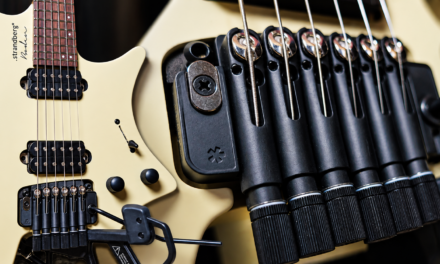
There’s no pickguard, the finish is clean, and the guitar has a relatively modern aesthetic. The combination of the 24-fret neck, roasted maple neck, locking tuners, and Gotoh two-point tremolo gives it the look and feel of a serious modern performance instrument.
The biggest selling point, however, is the electronics.
The TOD10 uses Tim Henson’s signature Fishman Fluence pickups with multiple pre-wired voices. Combined with the five-way selector and push/pull tone control, the guitar offers a surprisingly wide range of sounds.
Key Features and Specifications
- Tim Henson signature Fishman Fluence pickups
- Multiple pickup voices
- Five-way pickup selector
- Push/pull tone control
- Roasted maple neck
- 24 frets
- Stainless steel frets
- Low-profile heel joint
- Ibanez A-style headstock
- Tree of Death inlays
- Locking tuners
- Graph Tech nut
- Gotoh two-point tremolo
- Active electronics
- Recessed input jack
- 9V battery compartment
The low-profile heel is borrowed from Ibanez’s A line, and it makes the upper frets particularly accessible.
Pickup Voices and Tonal Options

The electronics are arguably the most interesting part of this guitar.
The TOD10 uses a combination of the five-way selector and push/pull tone control to access multiple pickup voices.
Rather than giving you one signature sound, the guitar gives you a variety of tonal options.
Clean Tones
The clean sounds are surprisingly versatile.
The single-coil-style sounds in particular stood out to me. They provide considerably more flexibility than you might expect from a signature guitar designed around a modern progressive player.
I went through the different voices using the same riff so that the differences between them were easier to hear.
The result is a guitar that can move from traditional clean tones into more modern sounds without requiring a completely different instrument.
Overdrive and High Gain
The TOD10 also works extremely well with gain.
I ran it through clean, overdriven, and high-gain sounds during my testing, and the different pickup voices give you plenty of options for shaping the guitar.
This is where I think the TOD10 starts to make sense beyond its connection to Tim Henson.
You’re not limited to one particular style.
The guitar can handle modern high-gain sounds, but the additional pickup voices give you enough flexibility to use it for other styles as well.
The Nylon Voice
One of the more unusual features of the TOD10 is its nylon-style voice.
Switching to the neck pickup and pulling up on the tone control activates the nylon simulation.
I paired this with Tim Henson’s signature Neural DSP plugin, which also includes a nylon setting, to see how closely the guitar could approximate a classical-style guitar.
It’s an unusual feature, but it’s also a good example of what makes the TOD10 different from a conventional electric guitar.
It’s not simply adding another pickup combination. It’s giving the player another tonal tool that could potentially be useful in a studio environment.
Build Quality
I wanted to take the build quality inspection further because there have been discussions online about the construction of these guitars.
Rather than simply relying on what other people had reported, I opened the guitar up and inspected the cavities, electronics, neck joint, and hardware myself.
And I was impressed with what I found.
Electronics Cavity
The electronics cavity looks complicated because there’s a lot going on inside the guitar, but the wiring is actually very clean.
The TOD10 uses active electronics, with the battery located in a dedicated compartment.
The 9V battery door is a quick-release design, so changing the battery is straightforward without having to deal with loose wires.
The solder joints I inspected were also very clean.
Tremolo Cavity

The tremolo cavity was clean as well.
One detail I particularly liked was the use of dampeners on the tremolo springs. These help reduce unwanted spring noise when using the tremolo.
The tremolo itself is fully recessed, and there’s felt padding inside the cavity. That helps prevent the hardware from damaging the body when the tremolo is fully released.
Recessed Input Jack
The recessed input jack is another thoughtful design feature.
Because the input is recessed into the body, accidentally stepping on your guitar cable isn’t as likely to yank the cable directly out of the jack.
There is a slight downside, though. If you ever need to tighten the input jack, you have to access the hardware through the back of the guitar.
It’s a small tradeoff for a design that works well in practice.
Neck and Fretwork
The roasted maple neck is one of my favorite parts of the guitar.
It’s a premium-feeling neck, and the low-profile heel makes accessing the upper register easy.
The guitar has 24 stainless steel frets, and the fretwork on my example was excellent.
I would put the fretwork on this guitar on par with what I’ve seen from Ibanez’s Prestige series.
The Tree of Death inlays are also extremely well executed. They appear to be made from a mother-of-pearl-style material and are highly polished.
Overall, the neck, fretwork, and hardware contribute heavily to the feeling that this is a serious professional instrument.
What I Found Inside the Neck Joint

I also removed the neck to inspect the neck cavity.
This isn’t something I’d recommend doing casually to a new guitar, but I wanted to see what was actually happening underneath the surface.
The neck cavity on my guitar was extremely clean.
I didn’t find:
- Excess paint buildup
- Chips
- Gunk
- Visible repairs
- Obvious construction issues
The pickup cavities were similarly clean and had shielding paint applied.
Based on my inspection, I didn’t find the build-quality problems that I had seen people reporting online about these guitars.
That’s obviously based on the particular example I had in my hands, but everything I inspected looked very well executed.
Playability
After spending about a month with the TOD10, the biggest compliment I can give it is that I stopped thinking about it as a Tim Henson signature guitar.
It simply felt like a really good guitar.
The neck is comfortable, the upper frets are easy to access, and the hardware feels appropriate for a professional instrument.
That’s exactly what I want from a signature guitar.
The artist’s preferences should make the guitar interesting, but they shouldn’t prevent another player from making it their own.
Who Is the Ibanez TOD10 Best For?
I think the TOD10 is best for players who want a modern, versatile electric guitar rather than simply a Polyphia-specific instrument.
It’s particularly compelling for:
- Modern rock players
- Progressive players
- Studio musicians
- Players who need multiple tones from one guitar
- Players who like modern Ibanez design and hardware
- Anyone who appreciates modern guitar design and playability
The pickup system is especially useful in the studio because you can get multiple distinct sounds from the same instrument.
Who Should Skip It?
If you’re looking for a traditional Strat, Tele, or Les Paul-style experience, this probably isn’t the guitar for you.
Likewise, if you don’t need multiple pickup voices or the nylon-style feature, you may be paying for functionality you won’t use.
And if the Tree of Death inlays aren’t your thing, there’s no getting around the fact that this is still very clearly a Tim Henson signature guitar.
Final Verdict
After spending about a month with the Ibanez TOD10, I came away impressed by how little the guitar actually feels like a signature guitar once you’re playing it.
Yes, you get the Tree of Death inlays. Yes, it’s designed around Tim Henson’s preferences. And yes, the pickup system has some very unique features.
But underneath all of that is a professional-grade instrument that works well beyond the music of its namesake.
The multiple Fluence voices aren’t just a gimmick. The hardware is excellent, the roasted maple neck feels premium, the fretwork on my example was outstanding, and my inspection of the internal construction revealed a very clean instrument.
Most importantly, I never felt like I was playing someone else’s guitar.
I could take this into the studio, use it in a live environment, and play my own music without feeling like I needed to sound like Tim Henson.
And I think that’s ultimately what separates a great signature guitar from a merely good one.
The TOD10 doesn’t just give you Tim Henson’s guitar. It gives you a genuinely versatile instrument that you can make your own.
Ready to Get One?
If you decide to purchase this gear, consider using one of my affiliate links below. It won't cost you anything extra, and your purchase helps support Music for Miles and future gear reviews.