
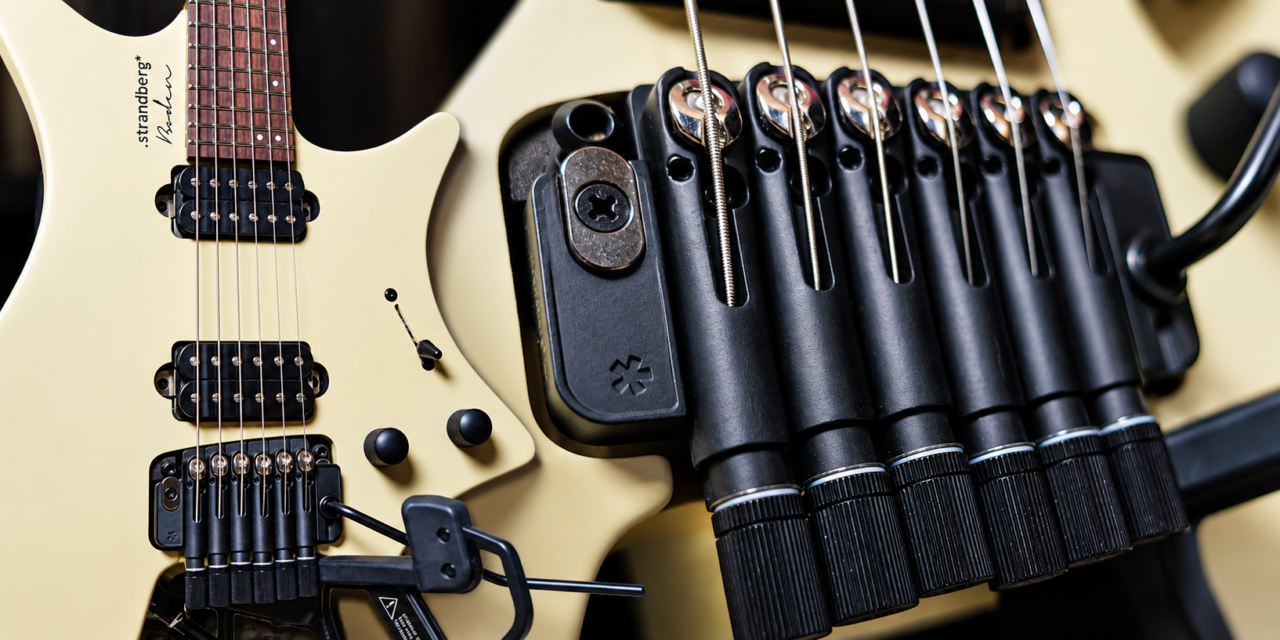
Adding the Arc TILT Tremolo Made the Essential 6 Even Better!
The Strandberg Boden Essential 6 has been one of my favorite headless guitars since I first reviewed it nearly two years ago. I’ve gigged with it, recorded with it, traveled with it, and it has continued to hold up exceptionally well. But there was always one thing I wished Strandberg would change: the original Essential was only available as a hardtail.
That’s finally changed with the new Strandberg Boden Essential 6 Tremolo. Strandberg has taken everything I liked about the original Essential and added its new Arc Tilt tremolo system, giving players a much more versatile version of one of the company’s most accessible headless guitars.
After putting the new tremolo through some serious abuse, I’m impressed. This might be one of the best tremolo systems I’ve used on a headless guitar.
What’s New With the Boden Essential 6 Tremolo?
The big story is obviously the addition of the Arc TILT tremolo, but Strandberg hasn’t simply bolted a trem onto the existing guitar and called it a day. The Essential 6 Tremolo also introduces some great new finish options while retaining the ergonomics, straight-scale design, EndurNeck profile, and lightweight construction that made the original Essential so appealing.
The guitar I tested features the new Dune Satin finish, which has a matte, earthy appearance that fits the modern Strandberg design surprisingly well. If that’s not your style, Strandberg is also offering a Whale Blue finish.
Familiar Strandberg Ergonomics

One of the reasons I’ve continued playing my original Essential is the ergonomics. The Boden body shape sits incredibly well whether you’re playing seated or standing, and the guitar is light enough that it’s easy to forget you’re wearing it during longer sessions.
The Essential 6 Tremolo retains a 25.5-inch straight scale, making it one of the more approachable Strandberg models for players coming from a traditional guitar. There’s no multiscale fret layout to adjust to, so the biggest changes for someone new to Strandberg are the headless design and the EndurNeck profile.
That makes the Essential a particularly interesting entry point into the Strandberg lineup. It still feels very different from a traditional guitar, but the straight scale removes one of the variables that some players may be hesitant about when trying a headless instrument for the first time.
The Strandberg EndurNeck

The guitar uses Strandberg’s patented roasted maple EndurNeck, which remains one of the company’s most distinctive features. It’s difficult to fully explain the EndurNeck without actually putting one in your hands because the profile feels dramatically different from a conventional rounded guitar neck.
The first time I played an EndurNeck, it probably took me about 15 minutes to adjust. Before long, I noticed myself changing how I positioned my hand for chords and bends. Once you adapt to it, the design feels surprisingly natural.
For players who spend long periods recording, practicing, or performing, the combination of the lightweight body and EndurNeck is one of the biggest reasons to consider a Strandberg.
Modern Specs and Build Quality
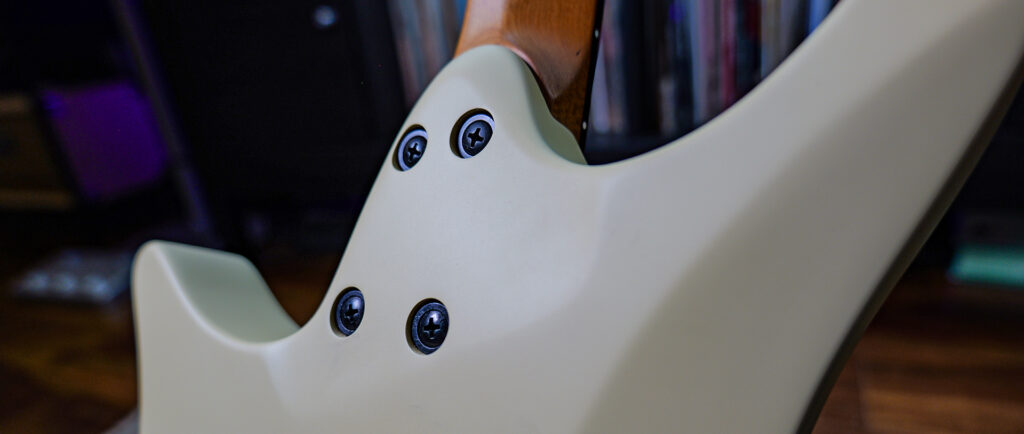
The Essential 6 Tremolo retains many of the modern appointments from the original model, including stainless steel frets, a rosewood fretboard, and Strandberg’s offset dot markers. The neck joint is also extremely clean, providing easy access to the upper frets without a bulky heel getting in the way.
Fit and finish on my review guitar was nearly perfect. The matte Dune finish was evenly applied across the body, the routing was clean, and even smaller details around the hardware and screw holes were finished properly.
The overall construction is clean and minimalist, which fits the entire philosophy behind the Essential series.
The New Arc TILT Tremolo
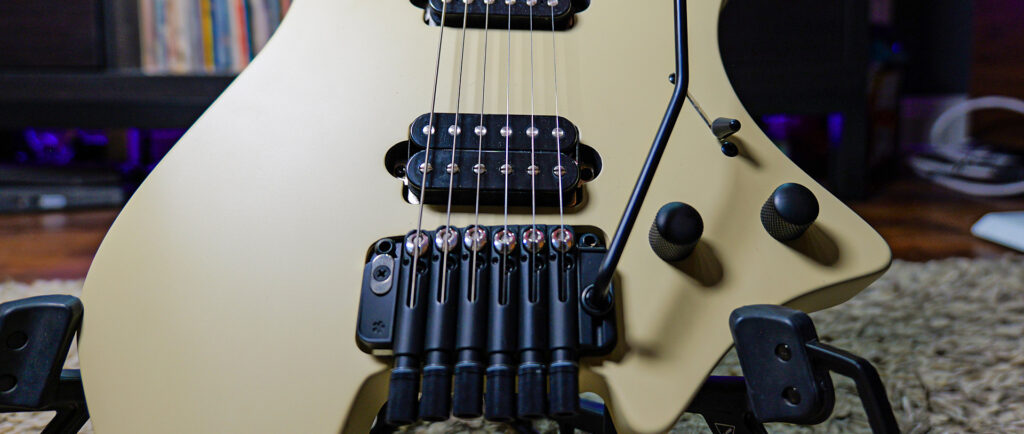
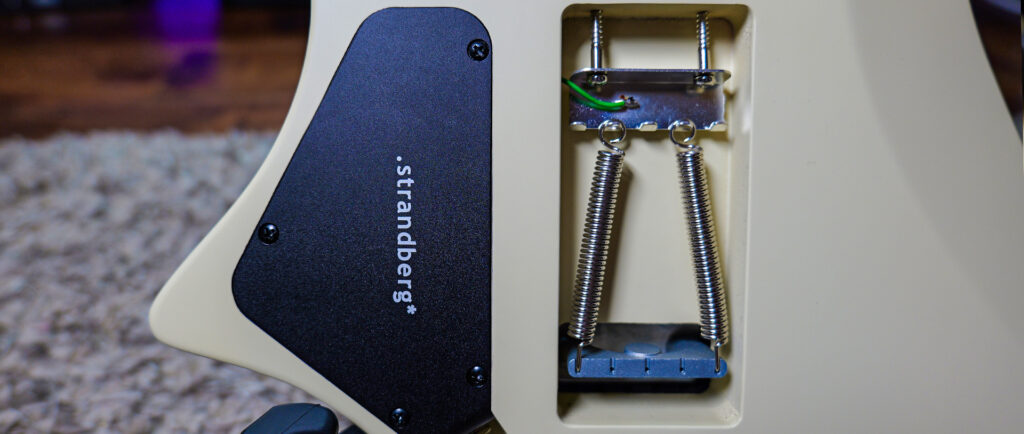
The star of the show is the Arc TILT tremolo system. The rear of the guitar is routed cleanly around the tremolo mechanism with two springs, and Strandberg leaves the system exposed rather than covering it with a large rear cavity plate.
I actually prefer this approach. It makes the tremolo easier to access and keeps the back of the guitar clean without adding another plastic cover.
More importantly, the tremolo feels excellent in use. It has a smooth response and gives you the ability to add everything from subtle vibrato to much more aggressive tremolo effects without sacrificing the ergonomic advantages of the Essential design.
How Stable Is the Arc TILT Tremolo?
Tuning stability is where a headless tremolo system can either make or break the entire guitar, so I didn’t go easy on this one. During the sound demos, I used the tremolo heavily, including deeper dives, while repeatedly checking whether the guitar returned to pitch.
I only tuned the guitar once before recording the demo, and despite abusing the tremolo throughout the session, it stayed in tune exceptionally well. That’s particularly impressive because I’ve had some frustrating experiences with other headless tremolo systems where a dive can leave individual strings noticeably flat afterward.
Based on my experience so far, the Arc TILT system has excellent tuning stability and mechanics. I’ll be doing a dedicated follow-up video specifically on the tremolo system, but my first experience with it has been extremely positive.
Strandberg OEM Pickups and Five-Way Switching
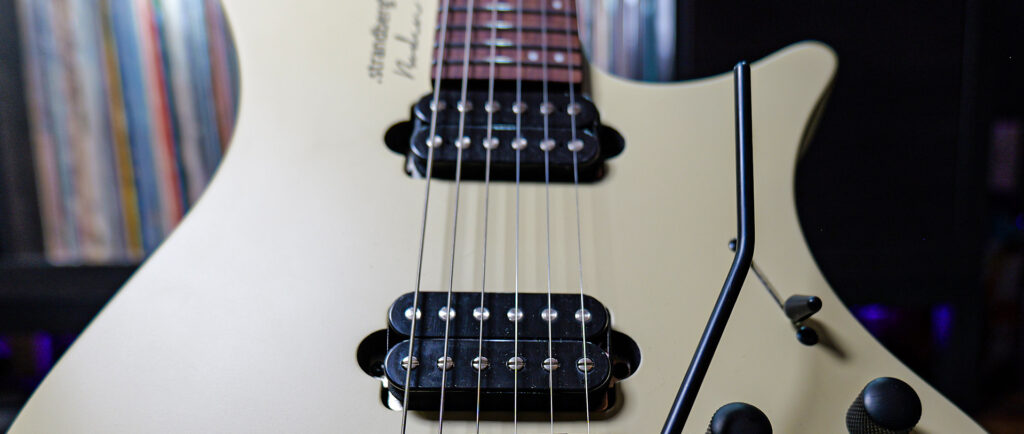
Just like the original Essential, the new Tremolo model uses Strandberg OEM pickups paired with a five-way selector. The switching system gives you several useful pickup combinations and makes the guitar capable of covering a surprisingly wide range of sounds.
During testing, I went through clean tones, more aggressive rhythm sounds, and higher-gain lead tones. The pickups can deliver articulate cleans while still having enough output and clarity for heavier playing.
That versatility fits the overall purpose of the Essential extremely well. This is the type of guitar you can throw in a gig bag and use for a wide variety of styles without needing a highly specialized pickup configuration.
How Does the Boden Essential 6 Tremolo Sound?
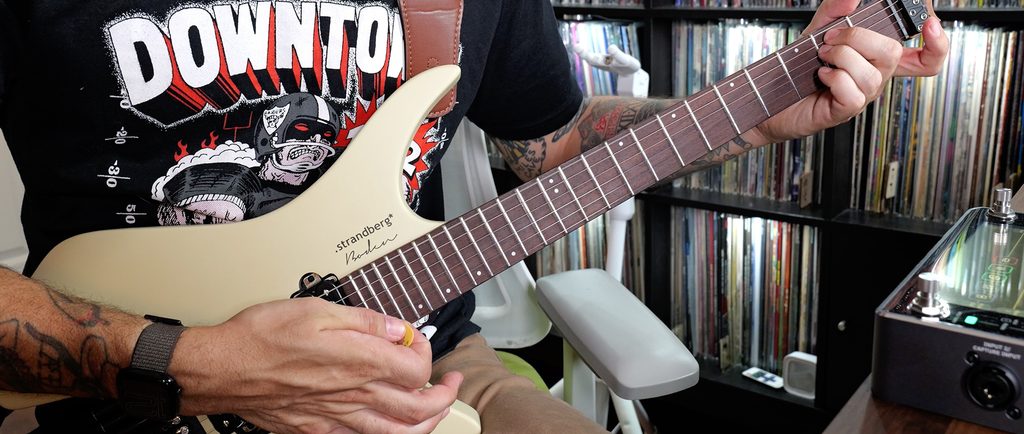
The Essential 6 Tremolo maintains the versatile character I liked about the original guitar. The five-way switching gives you plenty of tonal variation, ranging from bright and articulate clean sounds to thicker rhythm tones and high-gain leads.
More importantly, adding the tremolo doesn’t take away from what made the original Essential work. It still feels responsive, lightweight, and extremely comfortable to play. You’re simply gaining an expressive option that wasn’t available on the original model.
For me, that’s a pretty significant upgrade because tremolo is something I use regularly. The original Essential was already one of my favorite headless guitars despite being a hardtail. Adding a tremolo removes the biggest limitation I had with it.
Changing Strings on the Essential 6 Tremolo
Another area where the Strandberg design impressed me is string changing. This is one of the easiest headless systems I’ve used when it comes to installing a new string.
You simply pull the string through the bottom barrel, run it to the top of the neck, lock it down with a single screw, and tune it at the bridge. There’s very little fuss involved, which is especially valuable if you’re changing strings quickly before a session or performance.
Headless hardware can sometimes make basic maintenance more complicated than it needs to be. Strandberg has managed to keep the process straightforward.
Essential 6 Tremolo vs. the Original Essential
My original Boden Essential 6 has been my daily player for nearly two years. I’ve traveled with it, recorded with it, gigged with it, and it remains one of my favorite headless guitars. The only significant complaint I’ve had was the lack of a tremolo option.
The new Essential 6 Tremolo essentially addresses that complaint without sacrificing what I liked about the original. You’re still getting the lightweight body, straight 25.5-inch scale, EndurNeck, stainless steel frets, Strandberg ergonomics, and versatile electronics. Now you also get a tremolo system that, at least in my testing, has excellent tuning stability.
For a player like me who regularly uses a tremolo, that’s enough to make the new model my preferred version of the Essential.
Final Thoughts
I think Strandberg took one of its most compelling headless guitars and fixed the one thing I wanted changed. The Boden Essential 6 Tremolo retains the ergonomics, playability, lightweight construction, and versatility of the original while adding an excellent new tremolo system.
The Arc Tilt is the standout feature. After repeatedly using it throughout my demos, the guitar continued returning to pitch, and the mechanics feel excellent. Combined with the straightforward string-changing system, it’s one of the better headless tremolo implementations I’ve personally used.
My original Essential has been one of my favorite guitars for nearly two years, but it may finally have been replaced. The Essential 6 Tremolo gives me everything I liked about that guitar while adding the one feature I was missing.
I’ll be taking a much deeper look at the Arc Tilt tremolo in a follow-up, but based on my first experience, Strandberg absolutely nailed this update.
Strandberg Boden Essential 6 Tremolo Pros & Cons
Pros
Excellent Arc TILT tremolo, impressive tuning stability, lightweight and ergonomic design, 25.5-inch straight scale, roasted maple EndurNeck, stainless steel frets, versatile five-way pickup switching, easy upper-fret access, simple string changes, excellent fit and finish
Cons
EndurNeck requires an adjustment period for new players, headless design won’t appeal to everyone, OEM pickups may not satisfy players looking for premium aftermarket electronics
Disclosure: Strandberg provided the Boden Essential 6 Tremolo to Music for Miles for review. All opinions and testing are based on my own experience with the guitar.
Ready to Get One?
If you decide to purchase this gear, consider using one of my affiliate links below. It won't cost you anything extra, and your purchase helps support Music for Miles and future gear reviews.


